Systems Built to Support Daily Operations
Commercial HVAC in Norwich for facilities where temperature control affects productivity and uptime
RC Mechanical Inc installs, repairs, and maintains commercial HVAC systems across Norwich, serving buildings where equipment downtime directly impacts operations. When heating or cooling fails in an office, retail space, or industrial facility, the business feels it immediately—employees work in uncomfortable conditions, customers leave, or production slows. These systems demand a different approach than residential equipment because commercial facilities operate longer hours, serve more occupants, and depend on consistent performance to keep daily operations moving.
Commercial HVAC service includes installations for new construction, complete system replacements when aging equipment no longer performs reliably, and ongoing maintenance that catches wear before it becomes an outage. The work also covers repairs when systems fail unexpectedly, prioritizing quick restoration of temperature control so business activity resumes. Each building presents different operational needs—a restaurant kitchen generates heat and moisture that must be managed differently than a server room requiring precise cooling year-round.
Schedule a commercial HVAC consultation to review your facility's current system performance and operational requirements.
What Proper Commercial HVAC Service Requires
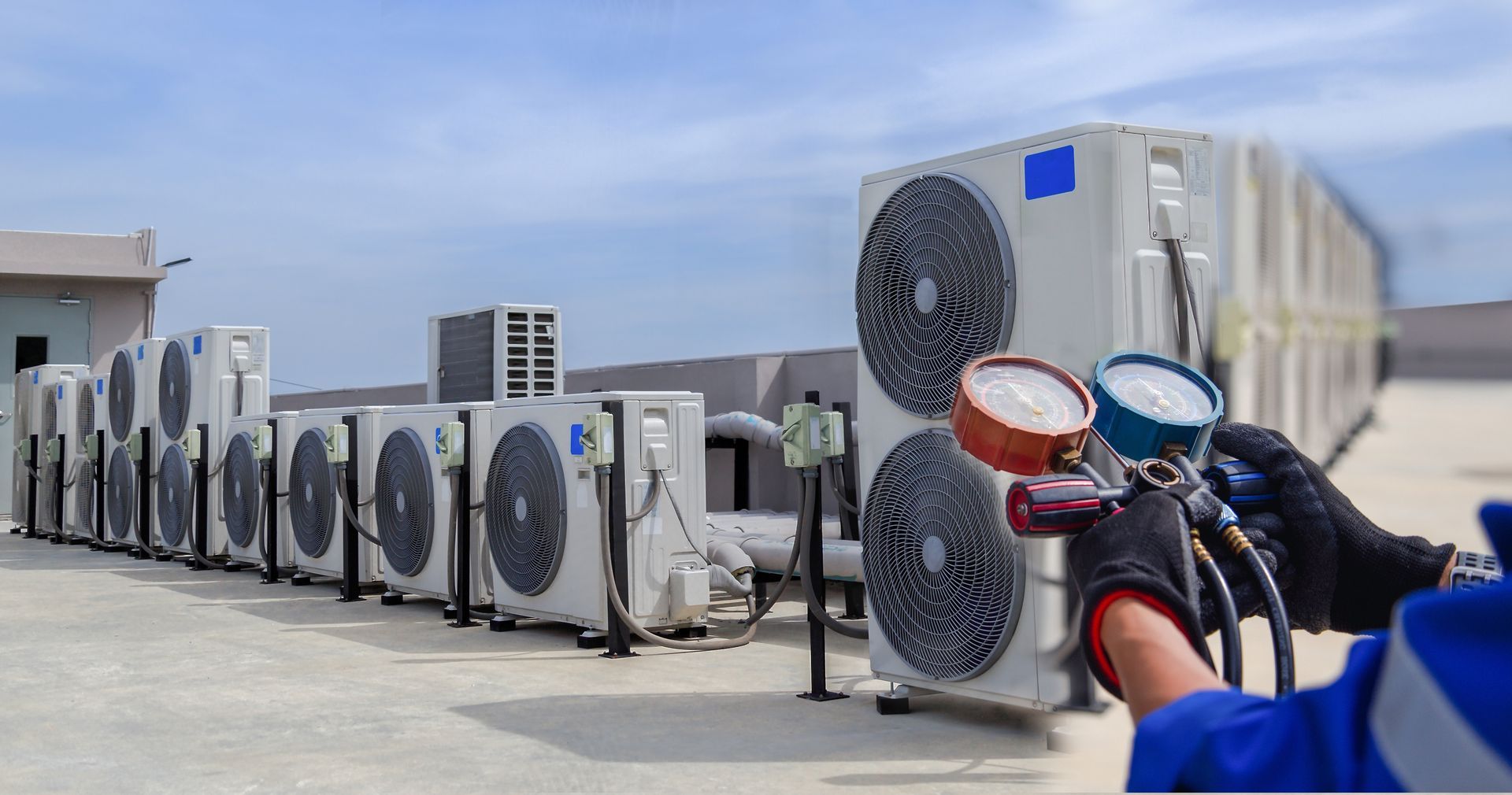
The service begins with evaluating the building's size, occupancy patterns, operating hours, and specific temperature or humidity needs that affect how the system must perform. For new installations, proper system sizing ensures the equipment matches the actual heating and cooling load—undersized units run constantly and fail early, while oversized systems cycle on and off too frequently, wasting energy and reducing equipment lifespan. Sizing calculations account for insulation levels, window area, internal heat sources from equipment or lighting, and ventilation requirements based on occupancy.
Once a system is operating correctly, you notice stable temperatures throughout the workday, fewer complaints from occupants about hot or cold zones, and utility bills that reflect efficient operation rather than equipment struggling to maintain setpoints. Routine maintenance keeps performance consistent by addressing refrigerant levels, airflow restrictions, and component wear before they escalate into emergency repairs that halt business operations.
The service includes coordination with project schedules during installations or major replacements to minimize disruptions, particularly for facilities that cannot afford extended downtime. Emergency repair response addresses unexpected failures quickly, restoring climate control so employees and customers return to comfortable conditions and operations resume without prolonged interruptions.
Questions Facilities Managers and Business Owners Ask
Commercial properties across Norwich face specific HVAC challenges related to building age, usage patterns, and the need for reliable temperature control during business hours.
What happens during a commercial HVAC maintenance visit?
Technicians inspect and clean critical components including condenser coils, evaporator coils, blower assemblies, and control systems, check refrigerant charge and pressures, test safety controls, verify thermostat calibration, and document system performance to identify trends that indicate developing issues before they cause failures.
How is system sizing determined for a new installation?
Load calculations measure the building's heating and cooling requirements based on square footage, insulation values, window area and orientation, occupancy levels, internal heat gain from equipment and lighting, ventilation needs, and operating hours—oversizing wastes energy and shortens equipment life, while undersizing leaves the system unable to maintain comfort during peak demand.
Why do commercial systems need more frequent maintenance than residential units?
Commercial equipment operates longer hours, serves higher occupancy levels, and faces greater consequences when failures occur, making preventive maintenance essential to catch wear patterns, maintain efficiency, and reduce the likelihood of unplanned downtime during business operations.
When should a facility consider replacing rather than repairing aging HVAC equipment?
Replacement becomes cost-effective when repair frequency increases, parts become difficult to source for obsolete models, energy consumption rises due to declining efficiency, or the system no longer meets current building codes or operational needs that have changed since the original installation.
What factors affect commercial HVAC operating costs in the Norwich area?
Utility rates, building insulation and air sealing quality, equipment efficiency ratings, thermostat programming aligned with occupancy schedules, regular filter replacement and coil cleaning, and outdoor temperature extremes during Connecticut winters and humid summers all influence how much energy the system consumes to maintain comfort.
RC Mechanical Inc provides commercial HVAC services for facilities throughout Norwich where system reliability directly affects business operations. Request an evaluation to discuss your building's specific heating and cooling needs and current equipment performance.