Diagnosis That Identifies Actual Failures
HVAC Repair in Norwich for commercial facilities where system failures disrupt business operations and occupant comfort
Commercial heating or cooling failures show up as offices that become too hot or cold for productive work, retail spaces where customers cut visits short due to discomfort, or industrial facilities where temperature-sensitive processes cannot continue. RC Mechanical Inc diagnoses and repairs commercial HVAC equipment across Norwich, addressing failures that halt normal business activity and require quick restoration of climate control. Proper troubleshooting identifies the actual component failure rather than replacing parts based on guesses—compressors, blower motors, refrigerant leaks, failed controls, and clogged coils all produce symptoms that overlap but require different repairs.
The diagnostic process uses pressure readings, temperature measurements, electrical testing, and airflow verification to isolate the failed component, then repair work restores the system to normal operation. Emergency service responds when failures occur outside business hours or during extreme weather when buildings become uninhabitable without heating or cooling.
Schedule commercial HVAC repairs to address system performance issues before they escalate into complete failures during peak demand periods.
How Repairs Address System Performance Issues
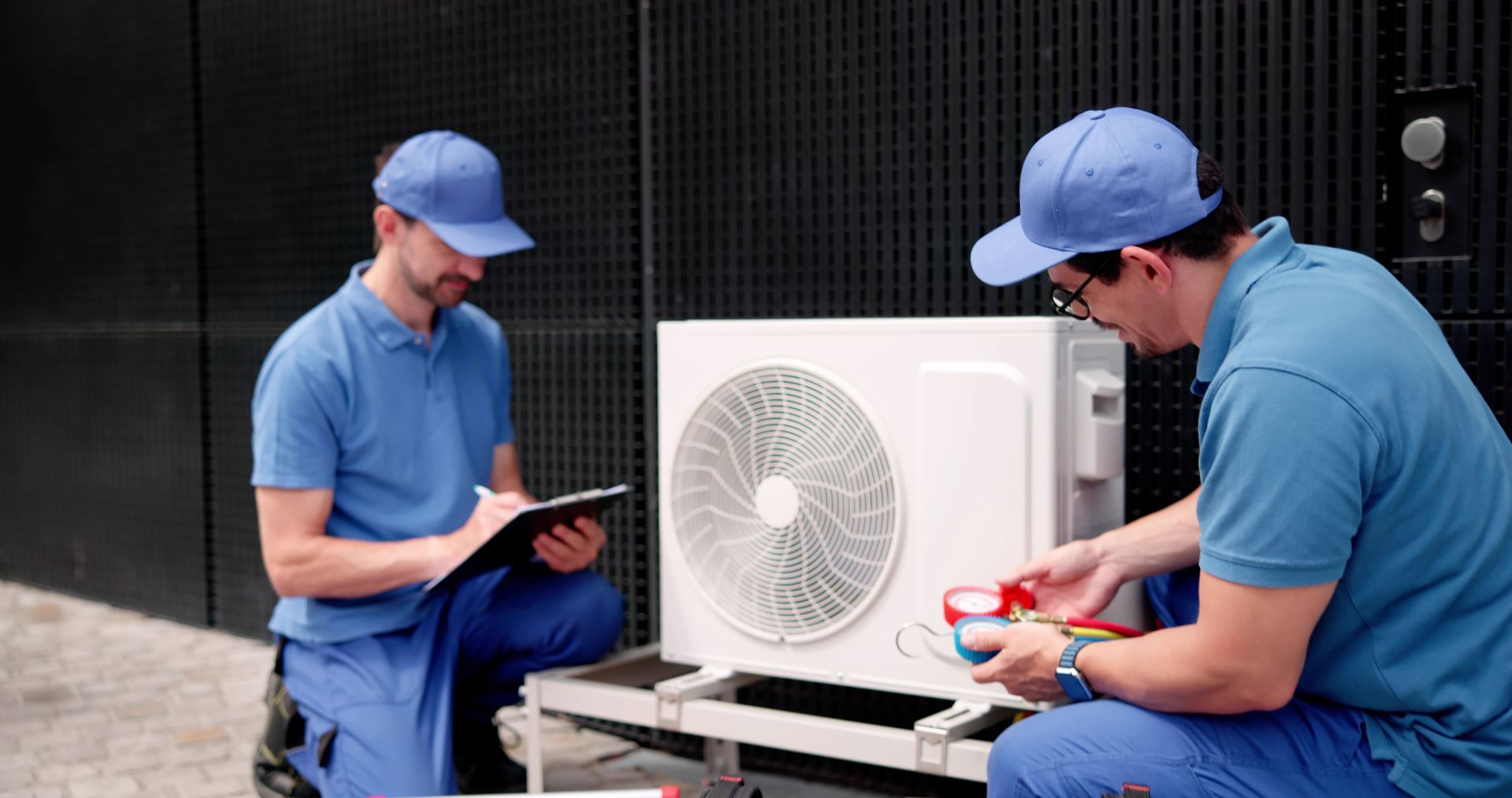
Repairs begin with verifying the reported problem—whether the system won't start, runs constantly without reaching setpoint, produces insufficient heating or cooling, makes abnormal noises, or trips breakers repeatedly. Technicians check refrigerant pressures and temperatures across the system to identify compressor failures, refrigerant leaks, or restriction in the refrigerant circuit, measure voltage and amperage at motors and compressors to detect electrical faults, and verify airflow across coils since blocked filters or dirty coils reduce capacity even when other components function normally.
Once repairs are complete, the system reaches and maintains thermostat setpoints consistently, occupied spaces return to comfortable temperature ranges so business operations resume normally, unusual noises from failing bearings or loose components disappear, and energy consumption returns to expected levels rather than spiking due to equipment working inefficiently. Properly executed repairs prevent recurring failures by addressing root causes—replacing a failed compressor without fixing the refrigerant leak that caused it to fail leads to another compressor failure within months.
Some repairs require sourcing replacement parts that may not be immediately available, particularly for older equipment models where manufacturers have discontinued components. When repairs become uneconomical due to parts cost or repeated failures indicating broader system deterioration, replacement becomes the more reliable long-term solution for maintaining business operations without ongoing interruptions.
Common Repair and Service Questions
Facility managers dealing with HVAC equipment failures need to understand what causes common problems and how quickly systems can be restored to operation.
What causes commercial HVAC systems to fail unexpectedly?
Refrigerant leaks from corrosion or vibration, compressor failures from loss of lubrication or electrical issues, blower motor bearing failures from continuous operation, frozen coils from restricted airflow or low refrigerant charge, failed control boards from power surges or component age, and clogged condensate drains causing water damage or safety shutdowns all produce sudden system failures.
How quickly can repairs restore heating or cooling?
Simple repairs like replacing failed capacitors, cleaning clogged drains, or resetting tripped safeties take less than an hour, while component replacements requiring refrigerant recovery, brazing, and recharging take several hours, and repairs requiring parts procurement extend based on availability—diagnostic time adds to total restoration when the failure cause isn't immediately obvious.
Why do systems fail more often during peak seasons?
Heating equipment works hardest during Norwich's coldest winter periods, and cooling systems face maximum demand during summer humidity and heat, exposing weaknesses in aging components that might function adequately under lighter loads—seasonal maintenance before peak demand periods catches developing failures while the system isn't critical to building operations.
What indicates a repair is no longer cost-effective?
When repair costs approach 50 percent of replacement cost, when parts become difficult to source for obsolete models extending downtime, when the same system requires multiple repairs within a year, or when efficiency has degraded significantly increasing operating costs, replacement provides better long-term value than continued repairs.
How does emergency service work for after-hours failures?
Emergency response prioritizes restoring basic heating or cooling function to make the building usable, sometimes implementing temporary solutions that allow operations to continue while parts are sourced or more extensive repairs are scheduled during business hours when the work won't disrupt occupants.
RC Mechanical Inc provides commercial HVAC repair throughout Norwich with experienced troubleshooting to identify actual failure causes and restore system operation. Call our office at (860) 859-3535 to report equipment failures and arrange service response.